Reverse French Nails: The Bold Manicure Trend Taking Over 2024
What if your French manicure could flip the classic look on its head, literally? Reverse French nails—also known as inverted French tips or negative space French manicures—are redefining elegance by placing the colored band at the base of the nail instead of the tip. This clever twist on a timeless design has exploded across social media and salon menus, offering a fresh, modern, and surprisingly versatile alternative for nail art enthusiasts. But what exactly makes this trend so captivating, and how can you master it yourself? Let’s dive deep into the world of reverse French nails, exploring everything from its surprising history to step-by-step application techniques that will have your fingertips looking runway-ready.
What Exactly Are Reverse French Nails?
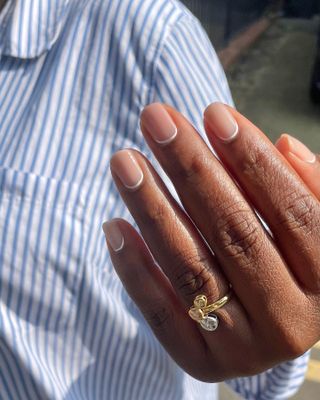
At its core, a reverse French manicure inverts the traditional French manicure’s structure. Instead of a pale pink or nude tip with a white or colored band, the design features a colored or glittery crescent shape at the cuticle end of the nail, leaving the tip bare or painted in a neutral shade. This creates a striking half-moon or negative space effect that draws the eye downward, elongating the nail bed and offering a minimalist yet bold statement. The beauty of this trend lies in its flexibility; the "reverse tip" can be a thin line, a wide band, or even an artistic curve, and it works on all nail lengths and shapes—from short squares to dramatic stilettos.
The visual impact is both contemporary and sophisticated. By focusing color at the nail’s base, reverse French nails create an optical illusion that makes nails appear longer and more slender, a huge plus for those with shorter or wider nail beds. It’s a design that whispers luxury rather than shouts, perfect for both everyday wear and special occasions. Unlike its classic counterpart, which can sometimes look cookie-cutter, the reverse version feels custom-made and fashion-forward, allowing for endless personalization through color, texture, and shape.
The Surprising History and Evolution of the Inverted French Manicure
While the traditional French manicure is credited to Parisian manicurist Michelle Menegon in the 1970s (though its origins are debated), the reverse version has a more recent and organic rise. It first gained traction in the early 2010s as part of the "negative space" nail art movement, where artists began experimenting with leaving parts of the nail unpainted to create graphic, architectural designs. Fashion runways were early adopters; designers like Marc Jacobs and Raf Simons featured models with inverted tips in their shows, using it as a subtle way to add edge to minimalist collections.
The trend’s popularity surged with the advent of Instagram and Pinterest, where nail artists shared geometric and minimalist designs that resonated with a generation seeking "quiet luxury." By the late 2010s, reverse French nails had trickled down from high fashion to mainstream salons. Its evolution has been fascinating—from simple white half-moons on nude bases to intricate metallic gradients, matte finishes, and even 3D accents. What started as an avant-garde experiment is now a staple in modern nail aesthetics, celebrated for its ability to look both deliberately undone and impeccably groomed.
Why Reverse French Nails Are the Manicure of Choice in 2024
Several converging factors have propelled reverse French nails to the top of 2024’s beauty trends. First, the "clean girl aesthetic" and minimalist luxury movements prioritize subtle, polished details over bold, full-coverage color. Reverse French nails fit this perfectly—they’re understated yet clearly intentional. Second, social media algorithms love the visual contrast of a naked tip against a colored base; it’s highly "scroll-stopping" and photogenic, driving massive engagement on platforms like TikTok and Instagram Reels.
Third, celebrity endorsements have played a huge role. Stars like Zendaya, Hailey Bieber, and Jennifer Lopez have been spotted with variations of the trend, from sleek black half-moons to soft peach gradients. This celebrity validation transforms a niche nail art style into a red-carpet-worthy choice. Finally, the trend’s adaptability is unmatched. It can be dressed down with a sheer pink base and white line for the office, or glamorized with gold foil and glitter for a night out. In a beauty landscape where personalization is king, reverse French nails offer a canvas for infinite expression without requiring full-nail art complexity.
Your Complete Guide to Tools and Products
Achieving salon-perfect reverse French nails at home is entirely feasible with the right toolkit. Investing in quality tools makes the precision work much easier. Here’s what you’ll need:
- Base Coat & Top Coat: A strengthening base (like OPI Nail Envy) and a glossy, long-wearing top coat (Seche Vite is a cult favorite) are non-negotiable for longevity and nail health.
- Nail Polish: Choose two contrasting colors: one for the reverse tip (often a bold, dark, or metallic shade) and one for the nail bed (typically a nude, sheer, or light pink). For a classic look, pair a deep burgundy base with a nude tip, or a navy half-moon with a sheer pink nail.
- Thin Nail Art Brush or Striper Brush: This is crucial for creating clean, crisp lines. A #00 or #0 detail brush dipped in your "tip" color gives you maximum control.
- Nail Guides or Stencils (Optional but Helpful): Semi-circle guides or French manicure stencils placed upside down at the cuticle area can help beginners achieve perfect curves.
- Cuticle Pusher & Nail File: For prepping the nail surface and shaping.
- Cotton Swabs & Nail Polish Remover: For cleaning up mistakes without starting over.
- Matte Top Coat (Optional): For a modern, velvety finish on the colored band.
Pro Tip: For the cleanest lines, use gel polish if you have a UV/LED lamp. Gel’s self-leveling properties and ability to be wiped with isopropyl alcohol for a smudge-free finish make it ideal for geometric designs like reverse French nails.
Step-by-Step: How to Apply Reverse French Nails Like a Pro
Follow this detailed process for flawless results every time.
Step 1: Prep the Canvas. Start with clean, filed, and buffed nails. Push back cuticles gently and remove any oils with a lint-free pad and cleanser. Apply a thin layer of base coat and cure (if using gel) or let dry completely.
Step 2: Paint the Nail Bed. Apply your chosen nail bed color (the color for the majority of the nail, usually the lighter shade) in two thin coats, avoiding the cuticle area by 1-2mm. Let each coat dry thoroughly. This creates your "negative space."
Step 3: Create the Reverse Crescent. This is the critical step. Using your thin brush loaded with the reverse tip color (the darker or metallic shade), carefully paint a curved line starting at one side of the cuticle, following the natural curve of the nail, and ending at the other side. The width of this crescent is your design choice—a thin line (1-2mm) is classic, while a wider band (up to 1/3 of the nail) is more dramatic. For perfect symmetry, you can use a stencil: place the curved edge of the stencil against the cuticle, paint over it, and remove to reveal a crisp half-moon.
Step 4: Clean Up and Cure. Immediately dip a cotton swab in nail polish remover (or use a cleanup brush) to tidy any mistakes at the cuticle line or edges. If using regular polish, let everything dry completely. If using gel, cure each layer according to the manufacturer’s instructions.
Step 5: Seal with Top Coat. Apply a generous layer of top coat, being careful not to drag the brush over the design and cause smudging. This seals everything in and adds high gloss. Cure if using gel.
Step 6: Final Touch. Once the top coat is dry, apply cuticle oil for hydration and a finished look.
Endless Inspiration: Color Combinations and Design Variations
The design potential of reverse French nails is virtually limitless. Here are some stunning variations to try:
- Classic Monochrome: The timeless choice is a sheer pink or beige nail bed with a crisp white half-moon at the base. It’s elegant, professional, and universally flattering.
- Bold & Graphic: Go for high contrast. Think jet black on a nude base, electric blue on sheer, or metallic gold on a dusty rose. This version is perfect for making a statement.
- Soft & Romantic: Use muted, creamy shades like lavender, taupe, or millennial pink for both the crescent and the nail bed, varying the opacity. A sheer base with a slightly more opaque pastel crescent looks dreamy.
- Gradient Reverse French: Instead of a solid line, use a sponge to create a ombré effect from the cuticle crescent outward, blending your tip color into the nail bed color.
- Glitter and Shimmer: Add glamour by using a glitter polish for the reverse crescent. A fine glitter gradient or dense glitter band against a matte nude is exceptionally chic for evenings.
- Double-Line Reverse French: Paint two thin parallel lines at the cuticle end in different colors (e.g., gold and black) for an intricate, fashion-forward look.
Seasonal Twist: In summer, try a coral crescent on a pale peach base. For fall, a deep burgundy band on a taupe nail feels cozy and sophisticated. Winter calls for silver or icy blue on a sheer base, while spring is perfect for mint green or butter yellow crescents.
Common Mistakes to Avoid for Flawless Results
Even with the best technique, a few pitfalls can ruin your reverse French manicure. Avoid these common errors:
- Applying Too Much Polish at the Cuticle: This is the #1 cause of smudging and lifting. Always leave a tiny gap (1mm) between your painted crescent and the actual cuticle. Polish on the skin will peel off quickly.
- Using Thick Coats: Thick polish takes forever to dry and is prone to denting and smudging. Thin, even layers are essential, especially for the delicate crescent line.
- Rushing the Drying Process: Impatience leads to disasters. Between each layer—base, color, top coat—ensure it’s completely dry to the touch. Use a quick-dry spray or drops if you’re in a hurry.
- Choosing the Wrong Brush: A standard wide nail polish brush won’t give you the precision needed. Invest in a good detail brush; it’s the difference between a salon finish and a DIY mess.
- Neglecting Nail Shape: The reverse crescent should complement your nail shape. On round or square nails, a straight or slightly curved line works best. On almond or coffin shapes, follow the natural curve more dramatically for harmony.
How to Make Your Reverse French Manicure Last
Longevity is a valid concern with any design that has exposed nail. To extend the life of your reverse French nails:
- Prep is Everything: Properly dehydrating the nail and using a bonder before base coat significantly improves adhesion.
- Top Coat is Your Shield: Reapply a fresh layer of top coat every 2-3 days to seal in the design and prevent chips, especially on the exposed tip.
- Wear Gloves for Chores: Household chemicals and hot water are the enemy. Always wear gloves when cleaning or washing dishes.
- Gentle Handling: Be mindful of your fingertips. Use the pads of your fingers, not the nails, to open containers or type aggressively.
- Touch-Up Strategy: If the reverse crescent chips at the edge, you can often carefully file the chip smooth and repaint just that small section with your detail brush, then reseal with top coat.
With proper care, a well-done reverse French manicure can last 7-10 days with regular polish, and 2-3 weeks with gel.
Adapting Reverse French Nails to Every Nail Shape and Length
One of the trend’s greatest strengths is its universal flattery. Here’s how to adapt it:
- Short Nails: Keep the crescent thin and close to the cuticle. A wide band will overwhelm a small canvas. A sheer base with a metallic thin line looks delicate and elongating.
- Long Nails: You have more room to play. Try a wider crescent or even a "reverse French tip" that extends slightly onto the nail bed as a graphic shape. Bold colors make a dramatic statement.
- Square Nails: A straight or slightly curved crescent that follows the square’s geometry looks sharp and modern.
- Round Nails: A soft, curved crescent that mimics the nail’s natural arch is most complementary.
- Almond/Coffin Nails: Embrace the drama! A crescent that follows the pointed curve of the nail tip creates a stunning, elongating effect. Consider a double line or a gradient for extra flair.
The Celebrity Stamp of Approval: Who’s Wearing Reverse French Nails?
The trend’s ascent to mainstream fame is undeniable, thanks in large part to A-list adoption. While no single celebrity "owns" the trend, several have been pivotal in popularizing specific variations:
- Zendaya frequently sports sleek, monochromatic reverse French nails—often in black or deep red on a nude base—complementing her bold, fashion-forward red-carpet looks.
- Hailey Bieber has been photographed with minimalist, barely-there reverse French manicures in soft pinks and whites, aligning with her "model-off-duty" aesthetic.
- Jennifer Lopez opts for glamorous versions, often with gold or glitter crescents, proving the design’s versatility from casual to couture.
- On the influencer front, nail artists like Mimi D`Addario and Priti Nails on Instagram and TikTok have created viral tutorials showcasing everything from simple reverse tips to intricate artistic interpretations, driving millions of views and inspiring a wave of at-home attempts.
The Honest Truth: Pros and Cons of the Reverse French Trend
Before you commit, consider the full picture.
Pros:
- Extremely Versatile: Works for any occasion, nail length, or personal style.
- Flattering: Creates an elongating optical illusion.
- Modern & Fresh: A sophisticated update on a classic.
- Less Frequent Touch-Ups: The tip is bare, so tip chips (common in traditional French) are less noticeable.
- Customizable: Infinite color and width combinations.
Cons:
- Requires Precision: The crescent line needs a steady hand and practice; it’s less forgiving than a full-coverage color.
- Potential for Mess: The cuticle area is tricky; mistakes are more visible here than on the tip.
- Exposed Nail Tip: The bare tip can be more prone to snagging or picking if the nail is weak.
- Can Be Time-Consuming: For a first-timer, it may take longer than a standard manicure.
The Future of Reverse French Nails: Where Is the Trend Headed?
Fashion forecasters suggest reverse French nails are not a fleeting fad but an enduring modern classic. We’re already seeing evolutions: "Reverse French 2.0" incorporates negative space not just at the cuticle but also as a small dot or line at the very tip for a balanced, symmetrical look. Mixed-metal reverse French—using different metallic finishes (matte gold, shiny silver, brushed bronze) in one design—is gaining traction. Additionally, the integration of tiny rhinestones or micro-paint splatters within the crescent adds texture without overwhelming the minimalist ethos.
As nail technology advances, expect to see long-wear, flexible peel-off stickers and press-on nails pre-designed with perfect reverse French patterns, making the trend accessible to those without steady hands or time for salon appointments. The core appeal—minimalism with an edge—ensures this design will remain a cornerstone of nail fashion for years to come.
Frequently Asked Questions About Reverse French Nails
Q: Are reverse French nails harder to do than regular French nails?
A: For most people, yes. The precision required at the cuticle edge (a sensitive, curved area) is more challenging than painting the straight, accessible tip. However, with practice, a steady hand, and the right tools (especially a detail brush), it becomes manageable.
Q: Can I do reverse French nails on short nails?
A: Absolutely! In fact, they are incredibly flattering on short nails. Opt for a very thin crescent (1-2mm) placed right at the cuticle line. This creates the illusion of length without overwhelming the nail.
Q: What’s the best color combination for beginners?
A: Start with a classic nude or sheer pink base and a white or cream crescent. The contrast is clear but forgiving, and mistakes are less obvious than with dark colors. Once confident, experiment with bolder hues.
Q: How long do reverse French nails typically last?
A: With proper application and care, 7-10 days with regular polish and 2-3 weeks with gel polish. The exposed tip may show wear faster, so top coat maintenance is key.
Q: Do I need a stencil?
A: Not necessarily, but they are a game-changer for beginners. Stencils ensure perfect curves and symmetry. As you gain skill, you can freehand it.
Q: Can I combine reverse French with other nail art?
A: Yes! You can add a tiny rhinestone at the crescent’s apex, create a double line, or even make the crescent a gradient. Just keep the design balanced so it doesn’t become too busy.
Conclusion: Embrace the Inversion
Reverse French nails have firmly cemented their place as a cornerstone of contemporary nail style. They represent a beautiful fusion of classic manicure principles and modern design thinking—taking a beloved tradition and flipping it to create something entirely new yet familiar. This trend is more than just a passing fancy; it’s a testament to the power of subtle details in personal expression. Whether you’re a nail art novice seeking a chic upgrade or a seasoned enthusiast craving fresh inspiration, the reverse French manicure offers a perfect blend of elegance, versatility, and understated edge. So, grab your detail brush, choose your color story, and don’t be afraid to turn the classic French manicure upside down. Your most sophisticated, eye-catching manicure yet might just be waiting at the base of your nail.